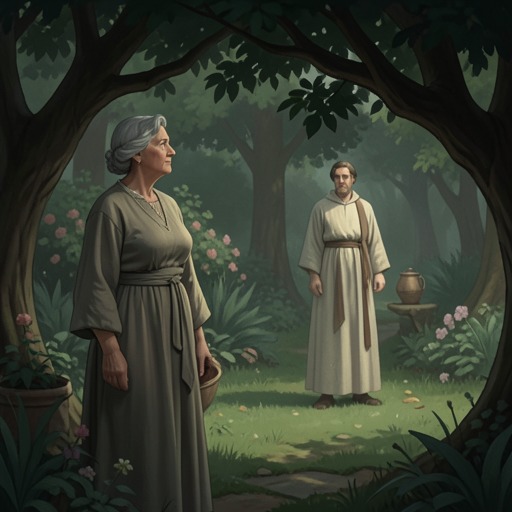
Mar Thoma Church
The God of Small ThingsThe Mar Thoma Church is the denomination of Reverend E. John Ipe, Baby Kochamma’s father, whose clerical position and reputation connect the family to Ayemenem’s Christian community. The church’s presence is established through both his office and the story of his blessing by the Patriarch of Antioch; elsewhere, the novel places religious respectability alongside the caste and political structures that govern whose account of events is believed.
Church and Family Standing
Reverend E. John Ipe is a priest of the Mar Thoma Church. He is also locally renowned as a man personally blessed by the Patriarch of Antioch, sovereign head of the Syrian Christian Church. That episode has become Ayemenem folklore, lending the family a religious distinction remembered well beyond the household.
The story behind the reputation reaches back to 1876, when Reverend Ipe was seven. His father brought him to see the visiting Patriarch at the Kalleny house in Cochin and pushed him forward to kiss the ring on the Patriarch’s middle finger. The frightened child’s lips left the ring wet; the Patriarch wiped it on his sleeve and blessed him. As an adult priest, Reverend Ipe continued to be known as Punnyan Kanj, or Little Blessed One. People travelled by boat from Alleppey and Ernakulam with children for him to bless, turning a childhood encounter into a continuing public role.
Relations Across Denominations
Reverend Ipe and Father Mulligan belonged to different Christian denominations, and their churches shared little beyond mutual disaffection. Yet the two men enjoyed one another’s company, and Father Mulligan was often invited to stay for lunch when he visited the household. The contrast between denominational estrangement and personal sociability makes the church’s divisions a lived social fact, not an absolute barrier to contact.
Religious Respectability and Institutional Power
The church’s association with Reverend Ipe’s standing sits within a wider social order in which family prestige, caste, and public authority overlap. At the Kottayam police station, Baby Kochamma invokes her father’s Untouchables’ school and the family’s history of educating and training Velutha to support a claim of familial authority over him. Inspector Thomas Mathew answers by criticizing those who first elevate people from oppressed communities and then seek police intervention when they allegedly misbehave. The exchange exposes how benevolence and patronage can be recast as entitlement when caste boundaries are challenged.
Baby Kochamma’s report to the police falsely represents Ammu and Velutha’s relationship as an attempted assault. Inspector Thomas Mathew records her account, then consults Comrade K. N. M. Pillai about Velutha’s political support. Pillai withholds that Velutha belongs to the Communist Party and had come to him for help, and he does not refute the false allegation. These encounters show the family’s religious and social standing operating within a larger machinery of police and party power; the church is part of the community setting, but the evidence does not present it as an actor in the police proceedings.
Narrative Significance
The novel frames the violence against Velutha as more than a private dispute: Estha and Rahel witness what is described as a controlled demonstration of humanity’s pursuit of ascendancy, structure, order, and monopoly. The episode is called history in live performance. Against that frame, Reverend Ipe’s inherited religious reputation and Baby Kochamma’s appeal to family benefaction reveal how respectable institutions and personal histories can coexist with a social order that controls the testimony and fate of the vulnerable. The Mar Thoma Church is not itself shown directing the violence; its significance lies in the religious and familial prestige that surrounds the people who act within that order.